Ceiling stains
Tan rings and blistered paint from ice dams, roof trouble or an upstairs bath, dried, sealed and refinished.
Ceiling stain repair after ice dams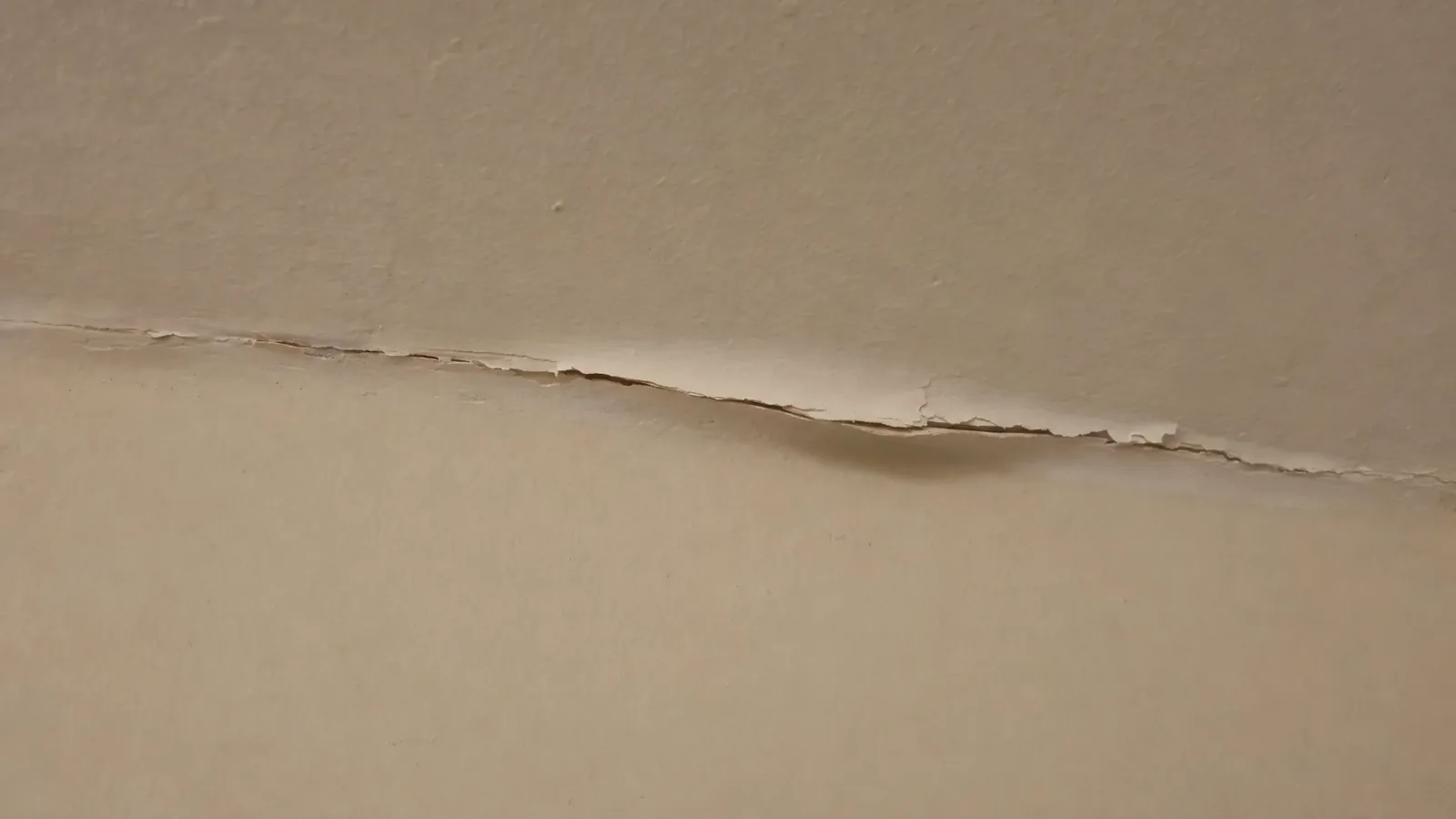
Thaw-season ceiling rings, soaked basement walls, split seams and punched-in holes, rebuilt and textured so the patch disappears into its surroundings, then handed over primed for paint.
Call 7 days, 7am–9pm
Calling books your wall a slot on a local drywall pro's estimate calendar.
Short estimate request
After it's sent, the drywall pro covering your street rings you to settle an estimate slot.
Before the first call
Ten minutes spent on this list shortens the first conversation and brings the estimate closer to the job as it really is. Take the items in order, then phone or use the quick form above. If a leak is still active, the wall and ceiling repair resources cover what has to happen ahead of any drywall work.
Repair lines
Repairs here fall into four groups. Every group gets its own page explaining what causes the damage, what a sound repair involves and how dry time sets the pace, while the page on how a repair moves from call to finished wall lays out the steps they share.
Tan rings and blistered paint from ice dams, roof trouble or an upstairs bath, dried, sealed and refinished.
Ceiling stain repair after ice damsLower-level drywall that drank up seepage or backup water, trimmed off along a level line and rebuilt once the room dries.
Damp basement drywallHairline, diagonal and seam cracks in mid-century rooms, opened up, bridged with tape and feathered so they stay quiet far longer.
Wall and ceiling crack repairDoorknob punctures, ripped-out anchors and cut-outs from other trades, backed with fresh board, taped and textured.
Drywall patching for holes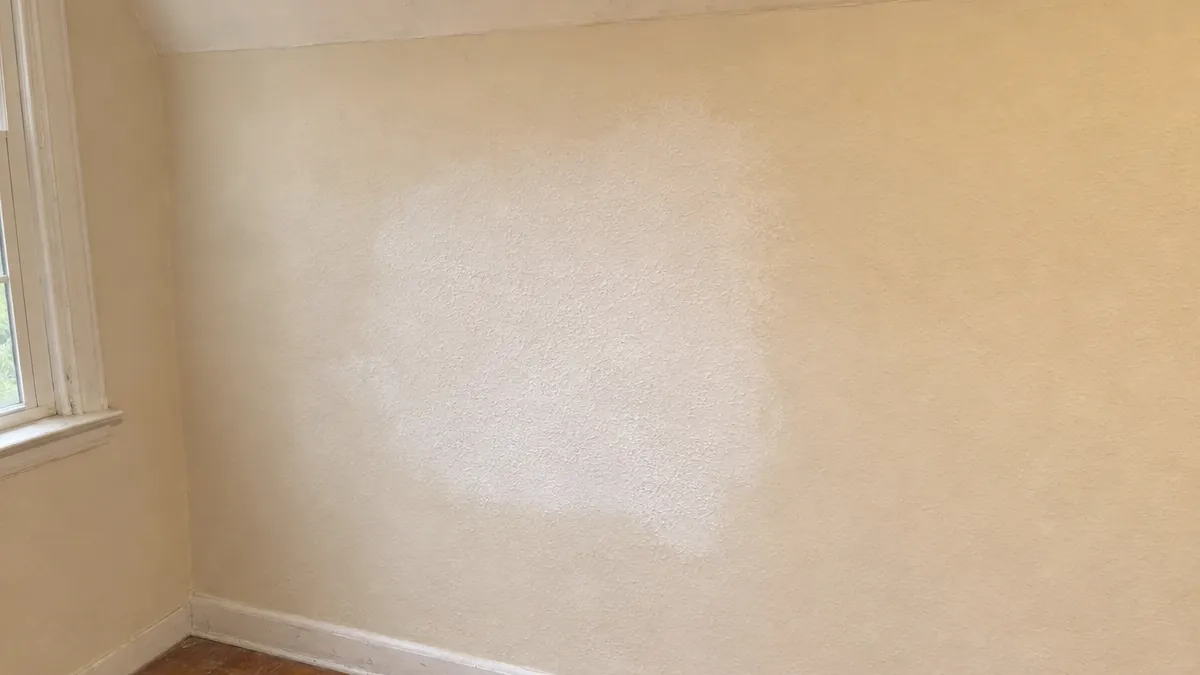
After other trades
A panel upgrade, an added circuit, a drain swap or a rerouted duct usually leaves tidy rectangles sawn out of the drywall. Timing is everything with these. The electrician, plumber or HVAC installer wraps up first, and whatever inspection their work requires gets signed off, because sealing a cavity too soon can mean sawing into it a second time.
Next, the hole is trimmed to straight edges, wood cleats are fastened behind any side that misses a stud, and a filler piece of board matching the old thickness is screwed in place. Tape and compound follow over several passes, each spread broader than the last, with a pause for drying between passes. The surrounding texture is copied, and once the final pass has cured the patch gets its primer.
Low-voltage cable runs and small box openings go through the same sequence at a smaller scale, and several openings on one floor can usually share a single booking. Sizes and backing are explained further on the page about patching holes and trade cut-outs.
Budget
National cost guides give a feel for scale. Inch Calculator's guide puts a small drywall repair, like a stress crack or a few popped screws, at about $60 to $200, and lists bigger work, or a batch of small fixes, at $300 to $900. Homewyse's May 2026 national estimate for patching a hole up to a foot across runs $297 to $472 per patch, and Thumbtack gives about $354 to $1,064 as the average for fixing a damaged drywall ceiling. Treat all of that as national context rather than Middleburg Heights pricing; the figure to budget around is the estimate the local pro writes up.
A single six-inch patch and a wall peppered with anchor holes, or a ceiling seam split end to end, are priced as very different jobs.
Overhead work takes longer to set up and finish, and a stairwell or vaulted ceiling may need staging.
Smooth walls need more sanding passes; knockdown, orange peel or popcorn has to be sprayed or copied by hand.
Soaked board is removed instead of covered, and waiting on a damp cavity can add another trip to the schedule.
Primer only, a spot coat, or a full wall painted corner to corner each price differently.
Compound goes on in layers that each need to cure, so even a modest repair commonly stretches across two or three visits.
Housing stock
Census Bureau survey figures for 2020 to 2024 count 7,764 homes in the city, and 5,306 of them date from 1950 through 1979, with 1,893 from the 1960s by themselves. The city's own history lines up with that: Southland Shopping Center opened in 1950, Interstate 71 arrived in 1959 with exits at Pearl and Bagley Roads, and the population climbed from 3,299 in 1950 to 12,367 by 1970.
Walls from that building boom carry a few habits. Joint tape that held for half a century can release along a seam as soon as it is disturbed. Metal corner bead knocked around by furniture and vacuum cleaners may crack its compound or bleed rust spots through the paint. A smaller group of houses is older again, 531 from before 1950, and some of those may have plaster instead of drywall. Plaster is mended by other methods, so bring it up on the call if the wall feels hard and sounds solid when knocked.
Older paint layers in a house this age can include lead-based paint. Before anyone sands or saws into painted surfaces, ask how the dust will be contained, and run a home test kit on the paint first if you aren't sure what is on the wall.
Weather
Lake Erie sets the calendar for most wall and ceiling damage in this corner of Cuyahoga County. Three patterns repeat across the seasons.
Lake-effect snow is typical around Cleveland from mid-November until the lake's surface freezes, usually late January or early February, and the 1991 to 2020 normals put average snowfall at Cleveland Hopkins at 63.8 inches a season. Attic warmth melts that snow from below; the runoff freezes again at the chilly eave and the next melt gets pushed beneath the shingles. Indoors the result is a tan blotch on the ceiling hugging an exterior wall, often a few days after a mild spell.
Melting snow and hard spring rain saturate the soil packed against foundations. A finished lower level shows it at floor height first: puffy baseboards, wall paper facing that crumbles near the slab and a stale, musty smell.
January averages 29.1°F at Hopkins, and weeks of furnace-dried air make framing and board shrink slightly. Seams over door and window heads are usually where hairline cracks open first, and plenty of them narrow again by summer.
Nearby
Middleburg Heights sits about 11 miles southwest of downtown Cleveland along US Route 42, roughly four miles southeast of Cleveland Hopkins International Airport. Repairs are arranged in the city and in the suburbs that ring it.
A line on each town lives on the service area page for the southwest suburbs.
Moving
The same Census survey finds 2,215 of the city's occupied homes are rented, and 1,339 homes are in buildings of 10 to 19 units, so a lot of walls here get handed back when tenants move on. Sales bring a deadline of their own: listing photos and a buyer's inspector both pick up on patched-over damage.
What deserves attention: ripped anchors and TV-mount holes, doorknob punctures behind doors, dinged outside corners along halls, and any ceiling stain, which buyers always ask about. What can often wait: tiny picture-nail holes the painter will fill regardless, and old hairline cracks in a room nobody is repainting.
Next, count back from the move date. Drywall repair comes first, then dry time and primer, then the painters, then cleaning and photos. Allow a day or two between the final compound pass and paint, more in a chilly basement where compound cures slowly. If a ceiling stain is on the list, get its cause fixed and written down first, since a mystery ring raises more questions than a mended one.
Finish
New joint compound is thirstier than a wall whose paint went on long ago. Roll paint right over it and the patch shows up as a flat or glossy blotch, which painters call flashing, especially in eggshell or satin with window light skimming across.
The cure is in the order of steps. The patch is sanded, its texture faded out beyond the edges, and then the area is sealed with drywall primer so the paint lies down evenly. On flat ceiling paint a primed patch can generally be touched up alone. On walls with any sheen, repainting the whole wall between its corners is the safer route, because a spot coat on satin tends to frame itself.
Ask for the estimate to say in writing whether paint is included. Some households want the patch primed and passed along to their own painter; others want the wall fully finished. Either works, provided everyone knows where the drywall work stops. Texture questions get a longer answer on the page about seam and crack repair.
Triage
Next step
Ring, use the form with a photo or two, or text a snapshot. After you approve the estimate, the repair lands on the calendar with its drying days already accounted for.
The pro handling drywall around here rings you to hear the story and pencil in an estimate.